


Five years ago, the COVID-19 pandemic changed life as we knew it. In the years since, many people who got COVID recovered from the initial illness, but some were left with a range of symptoms that persisted weeks or months after recovering from the initial infection.
These lingering symptoms, known as Long COVID, can vary from person to person. They include poor memory and difficulty thinking or concentrating (often referred to as “brain fog”), anxiety and depression, fatigue, post-exertional malaise, dizziness and sleep disturbances. It’s been estimated that 400 million people worldwide have been diagnosed with some form of Long COVID.
Now, University of New Mexico researchers are leading a multi-center study to see whether a noninvasive procedure known as transcranial brain stimulation (TMS), can improve the cognitive symptoms of Long COVID. TMS uses electromagnetic fields to stimulate nerve cells in the brain to help researchers understand how brain regions are affected by conditions like concussion and depression – and now, Long COVID. It also allows them to more effectively treat symptoms, including difficulties with concentrating, memory and problem-solving.
The four-year, $3.8 million study, funded by the U.S. Department of Defense, is recruiting 60 participants from UNM’s RECOVER (Researching COVID to Enhance Recovery) initiative, UNM Hospital’s Long COVID Clinic, and those locally who have Long COVID, said Davin Quinn, MD, FACLP, a professor in the UNM School of Medicine’s Department of Psychiatry & Behavioral Sciences. Quinn, who also serves as the department’s vice chair for of Adult Clinical Services, is the study’s principal investigator.
Also on the MANIFEST team are Alisha Parada, MD, professor Internal Medicine and medical director of the Long COVID clinic at UNM Hospital, and cognitive neuroscientist Andrei Vakhtin, PhD, who uses imaging techniques to study Long COVID at the Mind Research Network.
Quinn’s Long COVID study, known as MANIFEST (Magnetic Resonance Analysis of Neural Inflammatory Factors and External Stimulation), will begin in early May, focusing on the role of microglia, cells that are responsible for the immune response inside the brain. Quinn specifically wants to know how their activity in creating or reducing inflammation is related to the characteristic fatigue, brain fog and other cognitive and sensory problems associated with Long COVID.
The study will measure the microglial activity in the brains of participants with Long COVID and apply TMS to see if there is an anti-inflammatory benefit, and whether it helps them with their Long COVID symptoms, Quinn said.
This study has its origins in a 2023 research study on the effects of TMS on depression that Quinn and others on the MANIFEST team performed at UNM. For the study, which took place during the COVID pandemic, Vakhtin had adapted a special type of MRI sequence to assess the microglial activity in the brains of Long COVID patients, Quinn said.
“We collected data that showed that it's possible that electromagnetic brain stimulation is changing the behavior of these immune cells in the brain called microglia, and it may actually be modulating whether they're more active or less active,” Quinn said. For some patients who were receiving this type of stimulation, their brain scans showed that the microglia seemed to be decreasing as a result of that stimulation.
“We know that inflammation increases with stress, and it also can increase with depression,” he said. “We think that there may be a common theme with brain fog, with depression and with anxiety in the context of Long COVID that we might be able to address with this brain stimulation.”
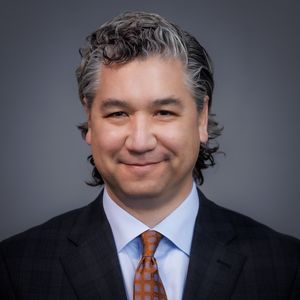
We think that there may be a common theme with brain fog, with depression and with anxiety in the context of Long COVID that we might be able to address with this brain stimulation.
- Davin Quinn, MD, FACLP, Professor, UNM School of Medicine
The upcoming Long COVID Study will follow the accelerated protocol of the 2023 depression study and required five treatments a day for nine days, Quinn said. Study participants will undergo functional magnetic resonance imaging (fMRI) before starting treatments, as well as after the brain stimulation to see whether there are observable changes in brain activity.
“After we get halfway through, we’ll pause and then do another testing session – another MRI – and then they’ll finish the second half of treatments,” he said.
Following an intake process to establish that it is safe and indicated for them to participate, study participants will receive the treatment while seated in a TMS chair, which is like a cross between a Barcalounger and a dentist’s chair, Quinn said. The energy from the coil delivering the brief magnetic pulses to the brain “feels like a woodpecker tapping your head,” he said.
The upcoming study is an important step toward addressing the role of inflammation in Long COVID, potentially allowing TMS to take its place alongside other treatments that Quinn prescribes for patients with Long COVID symptoms.
“The TMS mechanism is very focused,” Quinn said. “We're delivering it to a specific region of the brain, and while the effects may travel downstream from that to other parts of the brain, it's a very focal treatment, as opposed to taking a drug, which comes into your body and goes all over. The effects of a drug are quite systemic. And this is a very different type of approach.”
For more information on participating in the Long COVID Study, contact Crystal Garcia, UNM Center for Psychiatry Research, 505-272-9552.
