


Students across New Mexico are back in class—but it is their parents who are being put to the test as they try getting their kids back into a routine after a summer of fun-filled days, late-night sleep overs, and lots of sleeping in.
Experts say creating those school year routines is key to making the grade.
“Children thrive on rhythm,” Anna Duran, MD, said. “They thrive on routines and knowing what to expect: what time to go to bed, what time to get up, what time school starts. Routines set them up for success.”
Duran is a pediatrician and the chief medical officer at The University of New Mexico Children’s Hospital where she has spent the last 17 years caring for children and supporting patients.
But it wasn’t the job she thought she’d be doing.
“I wanted to be an elementary school teacher,” she said. “But my path brought me here and I love my job. I get to take care of kids. They make me smile; they just fill my cup. They honestly do.”
While Duran’s career took her in a different direction, she still finds herself teaching, helping kids and supporting parents. And when it comes to academic achievement, Duran said it starts with good routines at home.
Here are her top three lessons on acing those back-to-school routines:
Lesson #1: Establish a Bedtime Routine
Bedtimes are critically important to helping ensure children get enough sleep.
“In order for students to stay focused and be able to concentrate, they need sleep,” Duran said. “Kids who don’t get enough sleep are also at risk for a number of health problems.”
Those health problems can include obesity, type 2 diabetes as well as mental health issues.
“A student who doesn’t have enough sleep can’t pay attention in class,” she said. “They will struggle and that can lead to behavioral problems and poor academic performance.”
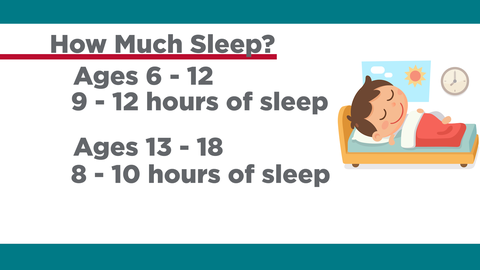
So, how much sleep do kids need?
According to the American Academy of Sleep Medicine, it depends on their age. For children between six and 12 years old, nine to 12 hours of sleep is recommended; children 13 to 18 years old should be getting between eight to 10 hours of sleep a night.
Duran said once you’ve figured out the appropriate bedtime for your child, you can establish a bedtime routine. You should start that routine between 30 minutes to an hour before that set bedtime.
“This is a great time for you and your child to wind down together,” she said. “Remove distractions like the TV, video games or screens. You can play soothing music, read a book together or even talk about your child’s day before heading to bed.”
Starting a Bedtime Routine
- Set a bedtime and stick to it (even on weekends)
- Start bedtime “wind down” routine 30-60 minutes before bed
- Remove distractions (TV, video games, screens)
- Create a calm, soothing environment
- Design a bedtime routine with your kids
A routine helps kids both mentally and physically prepare for bed which Duran said can also improve their sleep.
“The most important thing is to be consistent,” Duran said. “So, this should be something you do every night, even on the weekends, so your kids know what to expect.”
Duran said staying up late or sleeping in on the weekends should only be offered as a treat every once in a while.
“You can use that as positive reinforcement,” she said. “Maybe they've accomplished something good in school that week; you may want to let them stay up half an hour later, but nothing drastic because you don’t want to disrupt that sleep schedule and that routine.”

It’s never too late to start a routine. Decide what you want to do and what fits within your own home, and really work towards that. It doesn't have to happen overnight. It doesn’t have to be overwhelming. Just work on one routine at a time, together.
- Anna Duran, MD, Pediatrician and Chief Medical Officer, UNM Children’s Hospital
Lesson #2: Morning Routine
Similar to a predictable bedtime, Duran said having a set morning routine is also important.
“It's different for every family,” she said. “But it starts with eliminating those stressors that are barriers to getting you out the door.”
Duran said having a set wake-up time and setting predictable goals for your child every morning can alleviate stress; things like brushing their teeth, getting dressed and eating breakfast.
“Have a certain number of goals that your child can achieve in the morning, and make sure they understand those expectations,” she said. “It's also important to give your child time cues in the morning reminding them, ‘this is how much time we have until we leave.’ It helps them to establish that routine.”
Also, to help alleviate some of those morning stressors, Duran suggested identifying what can be done the night before, including preparing your child’s lunch, packing their backpack and laying out their clothes for the next day.
Lesson # 3: Patience and Collaboration
Establishing a routine takes time, and trial and error. Duran said it’s important to be patient and allow your kids to be part of problem-solving as you work together to refine your routines.
And it’s never too late to get back on track.
“It’s never too late to start a routine,” she said. “Decide what you want to do and what fits within your own home, and really work towards that. It doesn't have to happen overnight. It doesn’t have to be overwhelming. Just work on one routine at a time, together.”


