


Hazy skies and irritated eyes are both hallmark indicators of wildfire smoke in the air. But even if skies are clear, can nearby wildfires still impact health?
According to a recent advisory from the New Mexico Department of Health (NMDOH), smoke from various fires burning across the state is affecting outdoor air quality and may impact some New Mexicans more than others — but health experts say everyone should take precautions.
5-3-1 Visibility Method
- Under 5 miles visibility, people more likely to be affected by smoke should reduce outdoor time. These higher-risk groups include young children, adults over age 65, pregnant women, and people with heart and/or lung disease, and asthma or other respiratory illnesses.
- Under 3 miles visibility, people more likely to be affected by smoke should stay inside.
- Under 1 mile visibility, the air quality is unhealthy, and everyone should stay inside unless an evacuation has been issued.
Click here to read more from state health officials on improving indoor air quality.
“There are many things that burn in a fire, and exposure to these can be worrisome and cause problems to your lungs,” said Michelle Harkins, MD. “One of those is the particulate matter.”
Why Particulate Matter Matters: Signs and Symptoms of Smoke Exposure
Harkins is the chief of Pulmonary Critical Care and Sleep Medicine in The University of New Mexico School of Medicine. She explained that particulate matter is a mixture of solid and liquid particles that float around in the air after a fire and are not visible to the naked eye. Because they are so small, they can easily get into the lungs. Toxic gasses also form which can harm the lungs.

“They are probably the biggest responsibility for the symptoms that we see in people with fire smoke exposure,” Harkins said.
Strong winds, high temperatures, low humidity and the size of a wildfire are all factors that play a role in how far smoke travels.
“The pollutants in wildfires will travel, and they can travel for miles and miles away from the original fire,” Harkins said. “Over time, the particulates in the air are oxidized and can be even more dangerous to inhale.”
Typical symptoms these particulates cause are headache, burning or watery eyes, and upper respiratory symptoms like sneezing, slight cough or throat irritation.
As particles get down deeper in the lungs, symptoms may progress to a cough, wheeze or chest tightness. Harkins said this is usually more common in people who have underlying lung disease, but it can happen in anyone.
Who Is Most at Risk?
In addition to those with lung disease, people most at risk of developing severe symptoms are children.
“They breathe in more air per their body size, and they’re maybe outside playing and doing things,” Harkins said. Also at risk are pregnant women and those who have decreased immune defenses like the elderly and people with heart disease, asthma or chronic obstructive pulmonary disease (COPD).
Exacerbation of asthma or COPD could lead to worse symptoms or the development of pneumonia, an infection in one or both lungs.
How to Prevent Smoke Exposure
The best defense from smoke-exposure health impacts is to avoid being near a fire. If that is not possible, Harkins said N95 respirators help filter the particulate matter out of the air you breathe.

Staying indoors with doors and windows closed can also limit impact.
“You can even put towels around the doors and windows if there’s a leak,” she said.
If you have to be outside, limit exposure time or activity that may cause you to breathe more heavily, she added, and stay hydrated, because dehydration — especially outside — lowers your body’s defenses from smoke.
Harkins also recommended having a “clean room” in the home, or a room that is less likely to be contaminated with smoke and encouraged use of High-Efficiency Particulate Air (HEPA) filters. She discouraged turning on swamp coolers because they pull outdoor air into the home.
“It’s better if you have air conditioning,” she said. “If you do that, you should make sure that it’s closed off to the external intake so that it’s just circulating the air that’s in your home to better protect you. If you’re driving, don’t have the AC on without turning it on recirculation. If you have to be out, then keep your windows up.”
For those who have asthma, COPD or other conditions, prevention may include making a plan with your healthcare provider and ensuring you have medications or inhalers on hand to combat smoke-exposure symptoms.
Harkins said the duration of a person’s symptoms depends on how much wildfire smoke they are exposed to and for how long. More severe symptoms can last for several days after exposure. Frequent long-term exposure to smoke and fires in people like firefighters may lead to COPD or loss of lung function over time.
Finally, follow local advisories and air-quality reports to know when it’s safe to be outside and when it’s better to stay indoors.
To continue reading more about the impacts of wildfire-smoke exposure on mental health, click the HSC Newsroom story below.
UNM Researchers Link Heavy Wildfire Smoke Exposure to Poorer Mental Health Measures
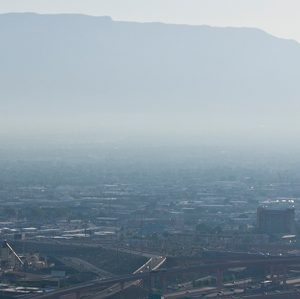
Millions of Americans increasingly find themselves living under a blanket of wildfire smoke for days or even weeks on end as climate change drives hotter, drier conditions, fueling conflagrations that can rage across hundreds of square miles.
That smoke is filled with ultra-fine particulate matter (PM)—a mix of solid and liquid particles in the air—measuring 2.5 micrometers or less (PM 2.5). Now, researchers in The University of New Mexico School of Medicine report that acute exposure to these particles for extended periods is associated with poorer outcomes on mental health measures.
Continue Reading Here
Banner and Thumbnail Photo Credit: Jill Rothenberg


