


The moment a woman finds out she’s pregnant can be a life-changing memory that stays with her forever.
Karen Taylor, clinical research manager in The University of New Mexico School of Medicine’s Department of Obstetrics & Gynecology, said she still remembers her own excitement.
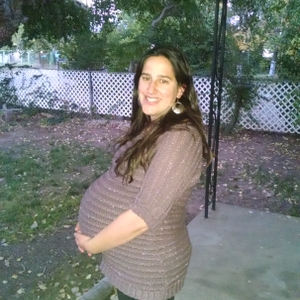
“It’s very mind-blowing to know that you have life inside of you,” she said.
The first time she felt her baby kick, it was like little flutters – so light she was unsure it was real. Over the next few months, the changes to her body and their reality intensified, including morning sickness and random aches and pains everywhere.
Discomfort became Taylor’s new normal, which is why late in her pregnancy, when she felt a sharp pain, she didn’t think much about it. In fact, she decided to tough it out until her next doctor’s appointment.
“I thought I had pulled a muscle, and it was abdominal pain right underneath the ribs on the right side,” Taylor said. “I thought it was no big deal.”
That was a Saturday. Her appointment was on a Monday, and what the doctor found was much more severe than a pulled muscle.
“It turned out I was having liver pain and high blood pressure,” she said. “I had no idea, but I had preeclampsia.”
What was supposed to be a routine checkup turned into Taylor’s birth story. She was rushed to the hospital and told she’d be delivering her baby girl that day.
“It took a long time to get her out, about three-and-a-half hours,” Taylor said. “Her oxygen levels were dropping, so they put oxygen on me.”
Unresponsive and blue – that was how Taylor’s daughter entered the world after nearly 24 hours of unexpected labor. Medical staff were able to resuscitate the baby and whisk her away to the intermediate care nursery for observation.
The combination of labor and the medications left Taylor exhausted and hazy. So, she said, she didn’t get that picture-perfect moment of having her newborn laid on her chest, right after birth.
“When I did get to finally see her in the middle of the night, it was like unwrapping a little present,” Taylor said.
For some women, like Taylor, preeclampsia has few to no symptoms. The biggest medical indicator is typically high blood pressure. Other signs may include protein in urine, blurred vision, severe headaches, abdominal pain and swelling of the hands and face, according to the World Health Organization.
What is Preeclampsia?
Preeclampsia – also known as toxemia – is a potentially dangerous pregnancy complication that causes high blood pressure and can impair organ function.
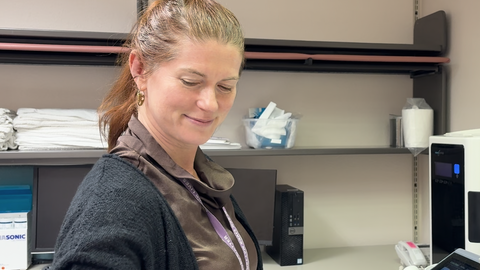
Christina Yarrington, MD, an associate professor and chief of the School of Medicine’s Division of Maternal Fetal Medicine, said preeclampsia typically causes high blood pressure in the latter half of pregnancy. It’s also associated with other complications that can affect a pregnant woman’s blood, liver, kidneys, and even the baby.
“Having high blood pressure increases the mother’s risk for a seizure,” Yarrington said. “That's what eclampsia means – seizure – which is terrifying and can be life-threatening.”
But visiting a doctor can be stressful on its own, and in some cases, it can be difficult to determine whether nerves are to blame when increased blood pressure is detected in the clinic.
“White coat syndrome” is a phenomenon where blood pressure readings in the doctor’s office are higher because patients are nervous or stressed, Yarrington said, adding that it’s very common and shouldn’t be overlooked.
“I want patients to ask for five minutes if they need it,” Yarrington said. “I am much more interested in what your blood pressure is in your truest self than what it is at your most stressed self.”
Yarrington has been practicing in New Mexico for almost two years. She calls the disproportionately high number of preeclampsia cases in the state “staggering.”
Nationwide, preeclampsia is estimated to affect 5-10% of pregnancies, according to the Centers for Disease Control and Prevention, and in New Mexico that number is more than double, she said.
Mothers may not out be of the woods even after they take their newborns home from the hospital. Preeclampsia can affect women after birth and even in their next pregnancy.
“For those with severe features of preeclampsia, their blood pressure can rebound after they deliver, and it usually goes up again days after they've left the hospital,” Yarrington said.
Helping her patients navigate these scary situations is why she brought her medical knowledge to New Mexico, Yarrington said. “It’s a privilege to help someone navigate a complicated pregnancy,” she said. “But what I hope is they can let me hold the fear – the scary thing – so they can thrive in the joy of being pregnant. That’s the reason I come to work every day.”
The way midwifery is practiced here in New Mexico is a beautiful example of collaborative care among provider types. It’s certainly within our scope of practice to continue caring for people who have preeclampsia, but it’s a beautiful opportunity for us to collaborate with our physician colleagues.
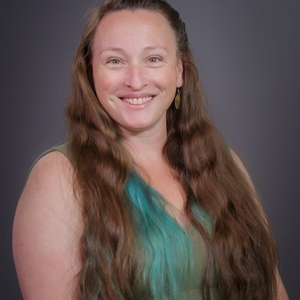
- Cathleen Hewlett-Masser, DNP, UNM College of Nursing Assistant Professor
Preeclampsia’s exact cause is still unknown, but it is strongly linked to abnormalities in the placenta.
From Patient to Practice
Taylor and Yarrington now work together at UNM Hospital, where they are currently working on research surrounding the positive effects baby aspirin can have on patients with preeclampsia, something Taylor also experienced in her second pregnancy.
“I started to see the maternal fetal medicine high-risk OBGYN specialists, and they put me on baby aspirin every day,” Taylor said. “That made all the difference.”
Now, she gets to use her experiences to help other mothers. “Please just don't tough it out,” Taylor said. “Call your doctor. You don't have to be tough.”
UNM Hospital’s OBGYN faculty ranges from extremely high-risk specialists, like Yarrington, to generalist OBGYNs and midwives.
Learn More About Nurse-Midwifery at UNM Hospital
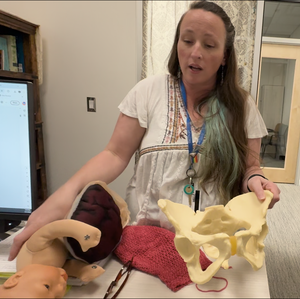
Cathleen Hewlett-Masser, DNP, an assistant professor in the UNM College of Nursing and a certified nurse midwife, has been practicing for eight years. Now, she gets to share her knowledge with students in the Nurse-Midwifery program and be part of a long legacy of excellence. UNM’s Nurse-Midwifery program has historically ranked among the best in the nation.
“It's a very humbling gift to see how my understanding, my passion for this profession and for this identity as a health care provider can transition and empower other people to also achieve that level of success and to motivate them to take really great care of families,” she said.
Midwives can help women navigate health challenges through every stage of life, Hewlett-Masser said.
“Our mantra is that we're with women throughout the lifespan,” she said. “It's usually from menarche, which is the onset of menstruation, all the way through to menopause.”
Midwifery offers one path for pregnant women, Hewlett-Masser said, but the collaboration opportunities available at UNM Hospital permit more comprehensive care when needed.
“The way midwifery is practiced here in New Mexico is a beautiful example of collaborative care among provider types,” she said. “It’s certainly within our scope of practice to continue caring for people who have preeclampsia, but it’s a beautiful opportunity for us to collaborate with our physician colleagues.”
Hewlett-Masser said she loves sharing her experience with students, but she will never fully stop practicing.
“Midwifery is really a calling, “she said. “Those of us who have found ourselves in the realm of midwifery care may have tried to not take this path, but it just keeps presenting itself to you.”
To learn more about the UNM College of Nursing Nurse-Midwifery program, click here.


