It was a mystery to veterinarians, researchers and animal lovers. In 2021, the Albuquerque BioPark made headlines amid its struggle to figure out what was killing several primates in its care.
What many may not know is that at the same time that was happening, the New Mexico Department of Health (NMDOH) was tracking a strain of the highly contagious bacteria, Shigella, in humans.
When BioPark officials also turned to NMDOH for help, they were able to conclude the mysterious illness plaguing primates, was the same.
In a recently published research paper in Nature Communications, researchers with The University of New Mexico Health Sciences Office of Community Health and the UNM College of Population Health, put both the human and primate outbreaks under the microscope to discover how the Shigella bacteria was able to travel through two populations in the same community, at the same time.

Pulling on the threads of outbreaks like this allow us insight into how these bacteria spread and how they are evolving.
-Sarah Shrum Davis, MPH, Emerging Infections Program Foodnet Coordinator, UNM Office of Community Health & Enteric Team Lead, NMDOH
Tracking Primate Cases
Carol Bradford, DVM,DACZM, the senior veterinarian at the Albuquerque BioPark, said during the primate outbreak, it was hard to pinpoint what was happening.
“In August of 2021 and then over the course of several weeks, we had gorillas, orangutans, siamangs and chimpanzees affected,” Bradford said. “In total, there were 13 animals that were affected by the illness over the course of several weeks.”
She knew they had to act quickly.
“I was disappointed and heartbroken when some of our animals were not getting better as quickly as I had hoped,” Bradford said. “Even though they were treated with appropriate antibiotics, the antibiotics didn't seem to make them feel better very quickly.”
What is Shigella?
Shigella is a gastrointestinal infection with symptoms of diarrhea, fever and stomach pain.
It’s a highly contagious bacterium that is spread through the fecal-oral route. One of the most common ways to get sick is from eating or drinking contaminated food or water. Another common way is contacting someone who is sick or recently infected with shigellosis.
Some strains are known to be antibiotic resistant.
Tracking Human Cases
Sarah Shrum Davis, MPH, is the foodnet coordinator for the Emerging Infections Program in the UNM Office of Community Health, and the Enteric team lead for NMDOH.
In May of 2021, her team noticed an uptick in human Shigella cases in the Albuquerque metro.
Many of the cases were found in the metro unhoused population. They looked at the BioPark outbreak and the human outbreak and set out to answer one major question: Were the animal and human outbreaks from the same source?
Finding Where the Threads Connect
“Pulling on the threads of outbreaks like this allow us insight into how these bacteria spread and how they are evolving,” Shrum Davis said.
At the time, she was working in the lab of Daryl Domman, PhD, who at the time of this research,was faculty in the UNM School of Medicine Department of Internal Medicine.
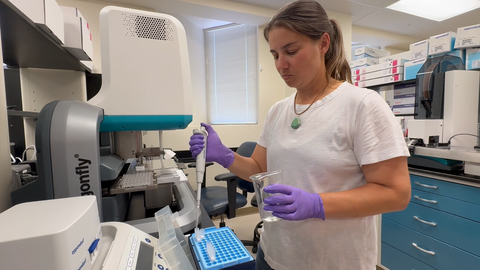
Domman is now a staff scientist in the BioScience Division at Los Alamos National Laboratory.
Domman ran a research group studying how pandemics and epidemics move through populations. They did extensive work tracking the COVID-19 pandemic in New Mexico and the Mountain West region of the country.
“Our group specializes in what we call genomic epidemiology,” Domman said. “We use pathogen sequencing data, so DNA, to understand how infections are spreading between people.”
Naturally, they set out to study how Shigella was moving through Albuquerque’s humans and non-human primates.
The research team started by analyzing gene sequence samples from infected humans and primates.
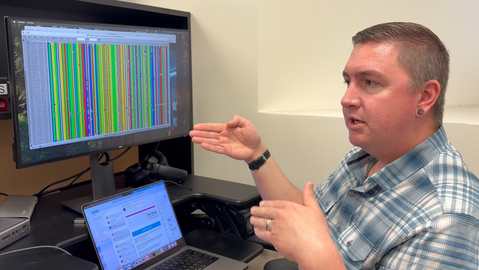
By tracing the mutations in the genetic sequences, researchers got a glimpse at how the infection spread. Tracing the bacterial lineage allowed the researchers to create a timetable of the outbreak.
“We can pinpoint approximately when it came in,” Shrum Davis said. “We believe this bacterium was circulating in Albuquerque prior to our first identified cases in May 2021. We think it likely came in about February 2021, and we believe it came from Texas.”
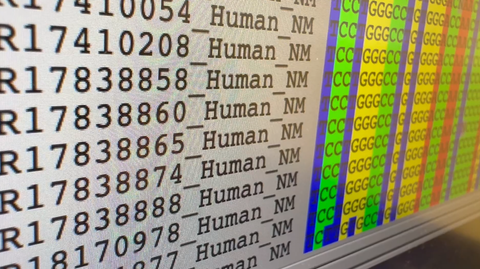
Once both lineages were traced, they compared the human samples to the non-human primate samples.
“Shigella, a bacterium, has a genome size of about 5 million base pairs, which is huge,” Domman said. “We found zero differences out of 5 million between a sample that was taken from a human and a sample that was taken from a primate, which means they're identical,” Domman said.
When comparing the samples, they were a perfect match, meaning the origin of both outbreaks was from the same source.

“The odds of that happening are zero,” Domman said. “We had really strong data supporting the fact that there was some sort of transfer of the strain into the zoo at some point. We just don't know how that happened.”
They don’t believe the strain was spread intentionally, and although they can trace the ancestry of the infection quite far back, the team isn’t able to find a “patient zero.” It’s still somewhat of a mystery how the illness spread to animals.
Stopping the Spread
Along with tracing the origin of the outbreak, there was also urgency to stop the spread.
“With any outbreak, what you're most interested in is stopping it,” Shrum Davis said. “On the human side, we partnered with the City of Albuquerque to set up portable hand washing stations and alerting local urgent care centers and emergency departments.”
On the animal side, the BioPark enhanced its cross contamination procedures.
“We’re continually looking at biosecurity protocols to see if there are things that we can do better,” Bradford said. “Since COVID, we've been wearing masks and gloves around our primates, just knowing that there are diseases that people can give to animals and animals can also give to people.”
There is also signage warning visitors not to throw food or other items into enclosures, Bradford said.
Pathway to Treatment
Studying these types of outbreaks not only helps trace the origins, but it gives crucial insight into treating them, Shrum Davis said.
This particular strain of Shigella was resistant to most first-choice antibiotics. After a lot of trial and error, researchers discovered azithromycin was the most effective in fighting the bacteria in both humans and primates.
With that discovery, providers were able to treat those impacted, but not before one person and six primates tragically lost their lives.
“That just emphasizes the importance of how interconnected human and animal health is and that truly none of us can be safe unless all of us are safe.” Shrum Davis said.
Shrum Davis said this particular outbreak of Shigella is over, but there are still some circulating strains in New Mexico. She also said the best way to prevent Shigella is by practicing proper hand hygiene- meaning washing up after using the restroom and before eating.