


At 17, Lauren Sesnie already knows that she wants to pursue a career in social work and behavioral therapy in New Mexico so that she can help people through sharing about her ongoing recovery from anorexia nervosa.
“Society puts a lot of pressure on what you look like,” said Sesnie, who attends East Mountain High School in Sandia Park, N.M., and receives treatment at The University of New Mexico Eating Disorders Clinic.
“That’s really not the healthiest, happiest version of you,” she said. “I know that word ‘healthy’ can scare a lot of people, including me. You need to learn that it's a good word.”
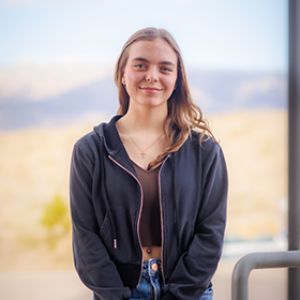
I know that the word ‘healthy’ can scare a lot of people, including me. You need to learn that it’s a good word.
-Lauren Sesnie, Patient, UNM Eating Disorders Clinic
Sesnie credits the UNM Eating Disorders Clinic with teaching her to ask for help when she needs it. “There is no, ‘I'm not sick enough,’” she said. “If you need help, you need help.”
Sesnie receives care from psychiatrist Kristina Sowar, MD, an associate professor in the UNM School of Medicine’s Department of Psychiatry & Behavioral Sciences who is board-certified in child, adolescent and adult psychiatry.
As director of UNM’s Eating Disorders Clinic, Sowar has treated patients with eating disorders for 11 years.
“The concept of support and recovery, for a lot of people, is more of a journey than a quick transition,” she said. “It’s a very comprehensive and ideally multidisciplinary approach to provide people with the most well-rounded opportunities to heal. At the UNM clinic, our goal is to provide a holistic assessment for people who are coming in with a concern of disordered eating patterns.”
This includes understanding both the history and the symptoms of eating disorders that people are struggling with and other comorbid or ongoing mental health conditions that may be intertwined with anxiety and mood disorders, she said.
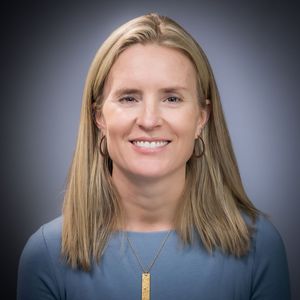
The concept of support and recovery, for a lot of people, is more of a journey than a quick transition. It’s a very comprehensive and ideally multidisciplinary approach to provide people with the most well-rounded opportunities to heal.
-Kristina Sowar, MD, University of New Mexico School of Medicine, Director, UNM Eating Disorders Clinic
Lauren Sesnie said this patient-centered approach where she feels heard has been crucial in her ongoing recovery from anorexia, which began for her in the eighth grade. “Dr. Sowar listens like no other psychiatrist I’ve been to,” she said. “No one has taken my thoughts into consideration like she does.”
She and Sowar have also discussed the effects of the fluoxetine (Prozac) that Sesnie takes for obsessive-compulsive disorder (OCD), which Sesnie said has been a contributing factor to her eating disorder.
“The fluoxetine really helps with my thoughts, and has helped me with my disorder a lot,” she said. “Dr. Sowar wants to help figure out the stressors in your life and what changes have been made by the medication. It’s becoming easier to accept that I have a meal plan, and I can follow it, and that people are here to support me.”
Lauren’s mother, Stacy Sesnie, said that she also appreciated Dr. Sowar’s counseling and support, particularly when it came to prescribing medication. “She helped us understand the role of medication as an important first step in treatment and one that’s a helpful component,” she said.
Sowar said clinic staff take a thorough medical history before considering which treatment strategies would be helpful for patients. These might include a referral to a dietitian with expertise in eating disorders, psychotherapy and participation in a support group.
For some, it entails medication management that might help with additional symptoms and/or other medical monitoring based on the severity of their illness, she said. Patients come to the clinic through referrals from primary care providers, other psychiatrists and the UNM Hospital Emergency Department.
While anorexia and bulimia historically are the better-known eating disorders, binge eating disorder – which was formally designated within the last 10 years – has become more common, Sowar said.
“It’s helpful to consider the concept of disordered eating more broadly,” she said. “This can be a variable experience for folks, where there's some dysfunction in terms of the healthiness of their relationship with their bodies and with food.”
Eating disorders are more widespread than people think, Sower said. “Up to 30 million individuals in the U.S. at any time would meet criteria for one of the eating disorders,” she said. “But so many people don't feel comfortable talking about it, or have a lot of shame, or it's just not something that they're actually being seen for.”
Thanks to social media, people increasingly compare how they look with how people look online. Sowar said that can correlate with the development or exacerbation of disordered eating patterns for some people.
Meanwhile, Sowar hopes to create greater awareness and understanding of disordered eating.
“One strategy is to continue to assess how we can provide support networks,” she said. “For some people, it might be a support group – a smaller circle that they could turn to. And then hopefully advocating to support for additional eating disorder resources where we’re short, here in New Mexico.”
Sowar emphasized that having open conversations about eating disorders is an important first step in supporting people and providing them with resources.
“The first time that that question comes up, it may not be something people are open to,” she said. “But it can be a pathway into seeing their challenges as something that is deserving of help.”


