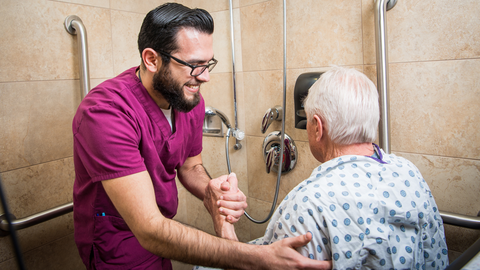
You will find them on the North Golf Course walking path, Central Avenue, or in a nearby arroyo: students in New Mexico’s only bachelor of science program in Emergency Medical Services (EMS) getting hands-on, real-world emergency training to prepare them for their roles as paramedics.
The program, one of only a handful across the country offering a bachelor’s degree in EMS, is also one of the few programs to be administered through an academic Department of Emergency Medicine.
“This affords us the opportunity to have EM- and EMS-boarded physicians participating in our program, which really amplifies the level of education and quality of education we're able to provide to our learners,” said EMS Academy director Lindsay Eakes, MBA, NRP, a UNM EMS graduate and an Albuquerque paramedic for 19 years.
Founded in 1972, UNM’s EMS Academy prepares students pursuing a four-year B.S. degree in EMS. Its students also include those taking EMS training courses, from First Responder through Paramedic, continuing education, state and national license renewal opportunities for all levels of EMS, and specialty courses. It also includes the EMS programs at UNM campuses in Gallup, Los Alamos, Taos and Valencia County.
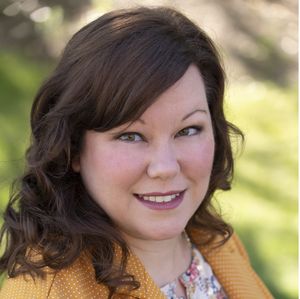
We train hundreds of folks a year, supporting them with their continuing education to retain and renew their licensure level within the community.
- Lindsay Eakes, MBA, NRP, UNM EMS Graduate & Paramedic
The program’s impact is statewide: Its network of instructors work across the state – in frontier firehouses, rural EMS services and tribal fire departments – from Tierra Amarilla and Raton in the north to Deming and Sunland Park in the south.
“We have a huge footprint in both initial licensure and continuing education,” Eakes said. “A lot of smaller services don't have the infrastructure to have an education department to support their groups through continuing education. We train hundreds of folks a year, supporting them with their continuing education to retain and renew their licensure level within the community.”
The program has seen increased enrollment in rural, frontier and tribal workforce courses, Eakes said.
“The increased enrollment is really encouraging, given the profound shortage of pre-hospital providers throughout the state. We are excited to support and be part of the workforce development efforts.”