


The summer season is flying by, as are riders looking to enjoy the warm weather on bikes, motorcycles and all-terrain vehicles (ATVs). Unfortunately, an increase in people enjoying the open road correlates with an increase in medical emergencies.
That’s what emergency medicine physician Jon Femling, MD, PhD, said he wants to prevent, in part 4 of UNM Health’s Summer Safety Series.
Femling said summer is known as “trauma season” in emergency rooms. That’s because when heat spikes, he said traumatic injuries do too. Many from riding-related incidents.
They mostly lead to broken bones and head injuries. Femling said emergency staff treat these types of cases almost every shift.
“Concussions are super common, people hit their heads, and then they can have everything from confusion to loss of short-term memory, to headaches that last for days,” he said. “It doesn't take too much of a hit to the head to have someone that's concussed, but if you hit it again, you can worry about permanent brain damage.”

We see so many people with really small accidents having permanent brain damage, and it's just not worth it.
-Jon Femling, MD, PhD, Emergency Medicine Physician, UNM Hospital
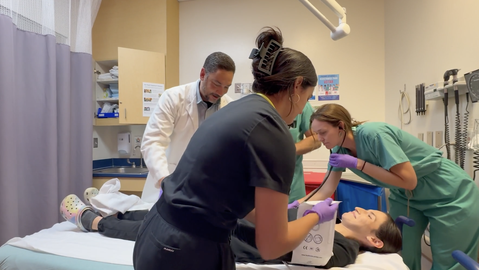
In addition to concussions, Femling said he also sees more serious head injuries like lacerations, traumatic head bleeds and facial fractures.
Usually, those injuries are in patients who were not wearing a helmet.
Femling also noted the head is not the only place he will check on a patient who has been involved in a bike, ATV or motorcycle incident.
“We’ll roll you on the side and check your back to make sure you're not having any spine injuries. We’ll make sure we've checked everywhere for injuries, because often it's not just the one injury in your arm that you're feeling, but it may be you also broke your leg, or you have internal injuries we need to check out.”
Fortunately, Femling said it does not take much to prevent these injuries.
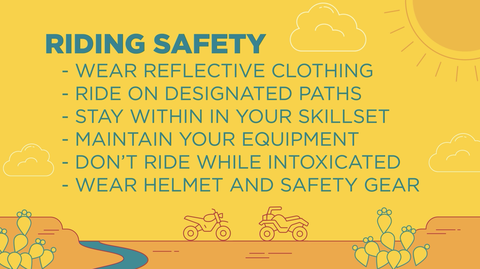
Outdoor riders can reduce their risk of ending up in an emergency room by wearing reflective clothing, especially if they are riding in the night or late evening.
Femling also advised bike and ATV riders to stay on marked trails and designated paths, stay within their skill set and maintain their equipment to avoid malfunctions.
Finally, he said to never ride after drinking alcohol and always ride with a helmet and safety gear.
“We see so many people with really small accidents having permanent brain damage, and it's just not worth it,” Femling said.
This story was the latest in a Summer Safety Series from The University of New Mexico Health Sciences Center. In this five-part series, we will be sharing expert summer-safety advice from Jon Femling, MD, PhD, an emergency medicine physician with UNM Hospital.
This week's topic is ATV, Bike and Motorcycle Safety. Check back each week for a new story! And don't forget — stay safe out there.
Pt. 1: Fourth of July | Pt. 2: Water Safety | Pt. 3: Heat Exhaustion and Heat Stroke | Pt. 4: Bikes, Scooters, ATVs and Motorcycles | Pt. 5 Outdoor Safety


