


With 15 national parks and monuments, many mountain ranges and a multitude of trails and sites to visit, New Mexico has no shortage of breathtaking outdoor places to explore.
In the 5th and final part of UNM Health’s Summer Safety Series, emergency medicine physician at The University of New Mexico Hospital, Jon Femling, MD, PhD, said preparation, not luck, will help you enjoy a safe adventure.
Before You Go
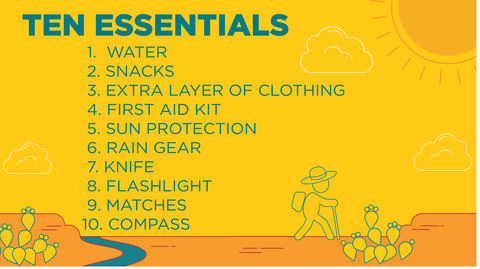
Preparation starts with packing the right gear and provisions before embarking on a hike.
“Here in the desert, the two big things that you have to absolutely never leave without are enough water and some layers for when the weather changes,” Femling said.
Weather and the temperature can change in an instant.
“We’ve seen that happen, where in the same day, we’ll have heat stroke and hypothermia, because of how quickly the environment can change, and because if you go up in the mountains, the temperature drops pretty precipitously,” Femling said.
He also encourages hikers to wear bright colors and take reflective gear. So, if they get lost, it will be easier for rescuers to find them from the ground or the air.
It’s also important to take a navigational tool, such as a charged smartphone with cell service or a handheld GPS, and something for shelter, too — even a rain jacket can count as shelter under the right circumstances.
After You Hit the Trail
Once everything is packed, and it’s time to venture out, Femling said to keep to the trail or designated path and communicate. That includes sharing the hiking location with a friend or family member and updating them if plans change mid-hike, as well as letting them know when to expect you back.
Femling said he carries a satellite communicator to notify rescuers, in case he ever gets into trouble. That’s because even if you’re well prepared, an unexpected mishap along the trail — whether you’re in the mountains or in the desert — may require the help of professional rescuers.
“We see a lot of folks that are out enjoying their time, and maybe they slip on a rock, they fall and they hurt themselves in a number of different ways.”
Do not burn down the forest. You may not actually need that fire right away.
-Jon Femling, MD, PhD, Emergency Medicine Physician, UNM Hospital
If an Emergency Happens
“If you know where you are and you’re on the trail, try to head down the trail,” Femling said.
But if you’re lost, or either you or someone you are with is seriously injured, Femling advised to stay where you are.
“We can come and get you,” Femling said.
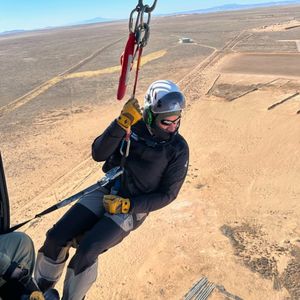
When he isn’t treating patients in the emergency room, Femling often rescues and treats patients in the wilderness with other emergency medicine physicians from UNM, through the UNM International Mountain Medicine Center (IMMC).
IMMC trains rescue personnel across the globe, including local teams like the Bernalillo County Sheriff’s Department Metropolitan Air Support Unit.
“We work with the county sheriff, we work with the fire department, and we can fly out, come out of the helicopter, package you up and get you out from no matter where you are,” Femling said.
Femling Facts
Dr. Femling is…
- A board-certified emergency medicine physician and clinical director
- A Diploma in Mountain Medicine holder and educator
- Certified in swiftwater rescue and helicopter hoist rescue
- An active researcher on human survival in extreme environments including in desert heat and at high altitude
- Experienced in rescues in deserts, the Grand Canyon, and the high mountains
He also said displaying the colorful clothing, reflective gear or shiny objects that you pack ahead of time, can help catch the eye of rescuers from the sky.
At night, you can activate a smartphone’s flashlight or screen to create a small infrared signal that will show up on rescuers’ night-vision goggles, Femling added.
“A little flash from your phone shows up for a really long ways, and we can hone in on that and find you pretty quickly,” he said.
Femling cautions against starting a fire, unless it’s truly necessary.
“Do not burn down the forest,” he said. “You may not actually need that fire right away.”
If you know where you’re going, you’ve studied the terrain, you’ve shared your location, and you’ve packed all the hiking essentials, Femling said you’re already on the right path.
This story was the final part of a Summer Safety Series from The University of New Mexico Health Sciences Center. In this five-part series, we shared expert summer-safety advice from Jon Femling, MD, PhD, an emergency medicine physician with UNM Hospital.
This week's topic is outdoors. Continue to visit the UNM Health Sciences Center Newsroom for more news about health and medicine and the people at UNM behind them. And don't forget — stay safe out there.
Pt. 1: Fourth of July | Pt. 2: Water Safety | Pt. 3: Heat Exhaustion and Heat Stroke | Pt. 4: Bikes, Scooters, ATVs and Motorcycles | Pt. 5: Outdoors


